
Events › Hundred Years' War › Edward III's ban on English wool exports
Edward III's ban on English wool exports
Record status: submitted, awaiting review · version 3 · record history
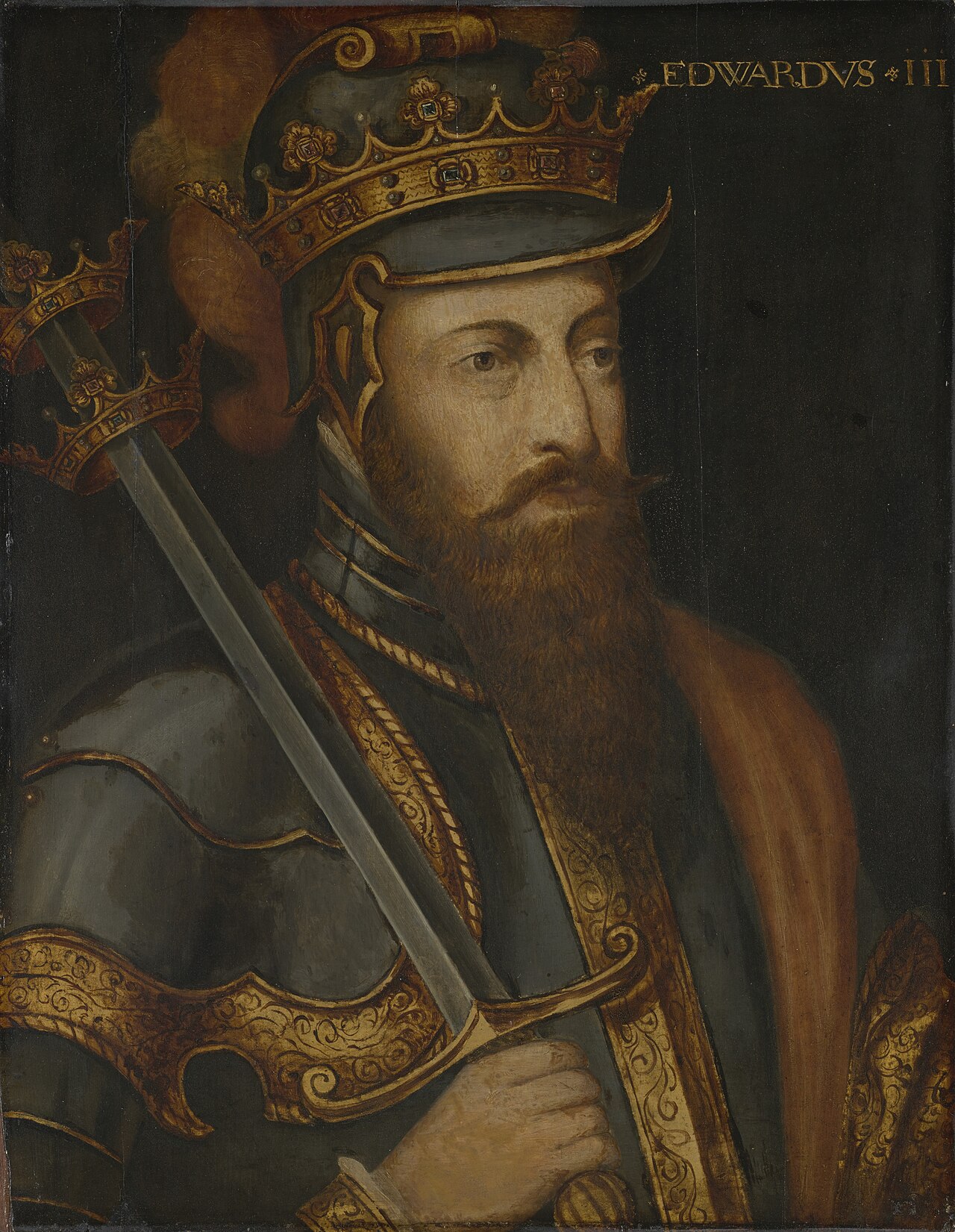
England’s government used wool as a weapon because Edward III, the king of England, needed money and pressure at the same time. This happened in August 1336, as England moved toward war with France. It was part of the road to the Hundred Years’ War, a long series of wars between England and France that began in 1337 and ended in 1453. The ban began in England in August 1336 and ended later after talks with Edward.
Edward needed money for the crown, meaning the king and his government, at the start of fighting with Philip VI, the king of France. Wool brought in much royal income, so Edward used that trade as a tool. Flanders, a rich region of cloth-making towns in what is now Belgium, needed English wool. Count Louis of Flanders, the ruler of that region, stayed loyal to Philip because Philip had put him back in power.
Because Edward needed money, England banned all wool and leather from being sent out of the kingdom. Because Flanders struck back at the ban, English merchants were seized at Bruges, a major trading city in Flanders, in September 1336. Then Philip put measures in place against Englishmen and their trade, and Louis enforced them in Flanders. So in October 1336, England and Flanders completely cut ties.
By December 1337, the cloth-making cities in Flanders had gone well over a year without approved English wool. The shortage badly hurt them. Jacob van Artevelde, a rich citizen of Ghent, a large cloth-making city in Flanders, later made a deal with Edward after giving him loans. The ban ended, and the cloth towns moved closer to England and farther from their count.
This is one part of Hundred Years' War.
When
Sometime in August 1336.
- What the source says
- All wool exports were banned in August 1336.
- Written for the computer as
1336-08(Julian calendar; years at or below zero are BC: −0005 is 6 BC)- How sure
- exact, to the month
- Worked out by
- the Chronum server, method
edtf_julian_calendarversion 1: the period lies within the written month (Julian calendar, converted through the Julian day number)
History Snippet never shows a single "best guess" date. The bar is the whole span the evidence allows; the hatched part means "somewhere in here". Why.
How we know
Began on: All wool exports from England were banned in August 1336. This source gives the month only.
Claim status: submitted, awaiting review
- supports Wool Smuggling and the Royal Government in England, c.1337–63: Law Enforcement and the Moral Economy in the Late Middle Ages, The Governance of the Wool Trade and the Devolution of Royal Justice
All wool exports were banned in August 1336.
Took place at: The ban applied to the whole English kingdom. Edward III forbade all exports of wool and leather from it.
Claim status: submitted, awaiting review
- supports Grand Strategy 1337–1338, in Trial by Battle: The Hundred Years War, Grand Strategy 1337–1338, opening paragraphs
In August 1336 Edward III forbade all exports of wool and leather from the kingdom.
Caused by: The ban was a way of raising money for the crown. It came at the start of the fighting with Philip VI of France.
Claim status: submitted, awaiting review
- supports Wool Smuggling and the Royal Government in England, c.1337–63: Law Enforcement and the Moral Economy in the Late Middle Ages, The Governance of the Wool Trade and the Devolution of Royal Justice
took place at the start of warfare with Philip VI
Context: Count Louis of Flanders stayed loyal to Philip VI, who had restored him to his county.
Claim status: submitted, awaiting review
- supports Grand Strategy 1337–1338, in Trial by Battle: The Hundred Years War, Grand Strategy 1337–1338, section on Louis of Nevers
Louis was a loyal servant of his sovereign.
Resulted in: The ban hit the Flemish cities hard, and English merchants were seized at Bruges in retaliation the next month (September 1336).
Claim status: submitted, awaiting review
- supports Low Countries and Burgundy 1250-1400: Flanders under France 1320-1400, Flanders under France 1320-1400, first paragraph
English merchants were seized at Bruges in retaliation.
Resulted in: By December 1337 no authorized English wool had reached Flanders for well over a year.
Claim status: submitted, awaiting review
- supports Grand Strategy 1337–1338, in Trial by Battle: The Hundred Years War, Grand Strategy 1337–1338
By December 1337 there had been no authorized exports of English wool to Flanders for well over a year.
Ended on: Jacob van Artevelde of Ghent later negotiated an end to the embargo, using loans to Edward III. The source gives no exact date.
Claim status: submitted, awaiting review
- supports The Rise and Fall of 'Brewer of Ghent' Jacob Van Artevelde, The Meteoric Rise of Jacob van Artevelde
Through giving him loans, Artevelde was able to negotiate an end to the embargo on the export of wool
Sources disagree: Some sources give August 12, 1336 for the ban, but the scholarly sources give only August 1336. The record says Philip VI moved on Flanders first, but the sources show Philip's measures and the Bruges seizures coming after the ban, and one source stresses English royal money needs.
Claim status: submitted, awaiting review
Where
England
- Coordinates
- 52.8000, -1.6000 (modern map coordinates)
- Error distance
- the true spot could be up to 400,000 m from those coordinates (400.0 km)
- Today this spot lies in
- United Kingdom
Borders shown are today's; the record says where the place is on the modern map, not what country ruled it then.
Who and what
- personEdward III
led
- personPhilip VI of France
was there
- personLouis I, Count of Flanders
was there
- personJacob van Artevelde
was there
Pictures
Record history
Every change is a new version; older versions stay readable forever.
- Version 3 · 2026-11-15 18:31 UTC · submitted, awaiting review
published after review of the private record