
Events › Hundred Years' War › Philip VI confiscates Guyenne from Edward III
Philip VI confiscates Guyenne from Edward III
Record status: submitted, awaiting review · version 2 · record history
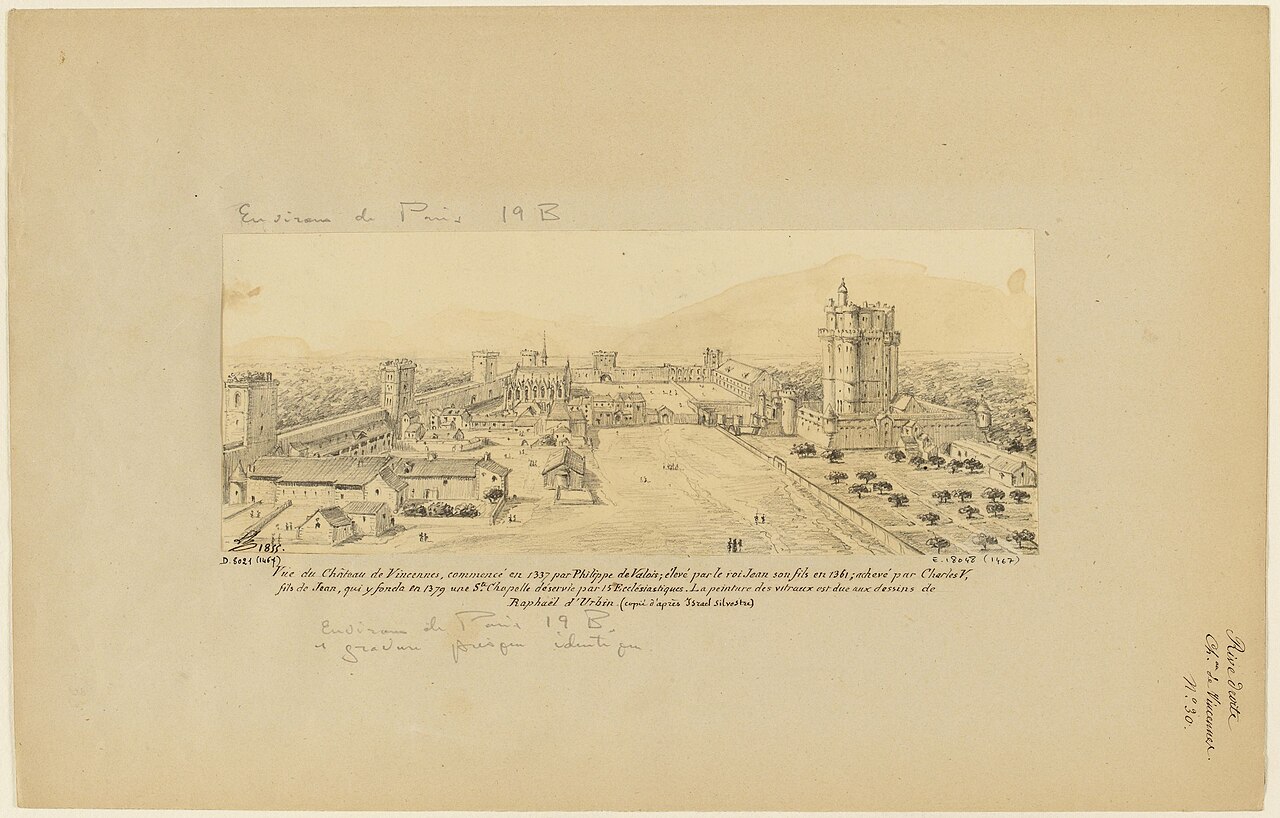
Philip VI, the king of France, ordered his cousin’s land taken because he said that cousin had broken his duty to him. The cousin was Edward III, the king of England, who held Guyenne, a large region in south-western France held by England’s kings. This happening was part of the Hundred Years’ War, a very long series of wars between England and France. It was at Vincennes, a royal home just east of Paris. It happened on May 24, 1337.
Philip said Edward was his vassal, a landholder who promised to obey and serve a more powerful lord, and had rebelled several times. Philip also said Edward had sheltered Robert of Artois, a French nobleman who had quarreled with Philip. Guyenne had long caused trouble between the English and French kings. By 1337, war between them seemed likely.
Because Philip said Edward had rebelled and had sheltered Philip’s chief enemy, Philip confiscated Guyenne, meaning he took it away by royal order. That same day, written orders from Vincennes told Philip’s royal officer in Périgord, a region in south-western France, to put the land in the French king’s hands. Philip wanted the order carried out in practice.
Edward saw the taking of Guyenne as unfair. Because of that, he challenged Philip’s right to be king of France. Afterward, the quarrel over Guyenne and the French crown could no longer be settled peacefully. The confiscation turned a long argument into open conflict between the kings of England and France.
This is one part of Hundred Years' War.
When
Sometime on May 24, 1337.
- What the source says
- Le 24 mai 1337, le roi Philippe VI de Valois confisque la Guyenne à son cousin, le roi d'Angleterre Édouard III.
- Written for the computer as
1337-05-24(Julian calendar; years at or below zero are BC: −0005 is 6 BC)- How sure
- exact, to the day
- Worked out by
- the Chronum server, method
edtf_julian_calendarversion 1: the period lies within the written day (Julian calendar, converted through the Julian day number)
History Snippet never shows a single "best guess" date. The bar is the whole span the evidence allows; the hatched part means "somewhere in here". Why.
How we know
Began on: On May 24, 1337, King Philip VI of France confiscated Guyenne from his cousin, King Edward III of England.
Claim status: submitted, awaiting review
- supports 24 mai 1337 - Philippe VI de Valois confisque la Guyenne, Opening paragraph
Le 24 mai 1337, le roi Philippe VI de Valois confisque la Guyenne à son cousin
Resulted in: The confiscation marked the beginning of the Hundred Years' War.
Claim status: submitted, awaiting review
- supports 24 mai 1337 - Philippe VI de Valois confisque la Guyenne, Opening paragraph
Ce sera le début de la guerre de Cent Ans.
Background: Guyenne, also called Aquitaine, lay in south-western France and had stayed under English control under the 1259 Treaty of Paris.
Claim status: submitted, awaiting review
- supports Hundred Years’ War - Winner, Definition & Period, Causes of the Hundred Years' War
1259 Treaty of Paris kept the Duchy of Guyenne (also known as Aquitaine) in southwestern France under English control
Sources disagree: The royal letters are dated at Vincennes just outside Paris, and the sources give no other meeting place. One source (History.com) puts Edward's claim to the French crown before Philip's move, while the others have it follow the confiscation.
Claim status: submitted, awaiting review
Where
Vincennes, near Paris
- Coordinates
- 48.8473, 2.4390 (modern map coordinates)
- Error distance
- the true spot could be up to 10,000 m from those coordinates (10.0 km)
- Today this spot lies in
- France
Borders shown are today's; the record says where the place is on the modern map, not what country ruled it then.
Who and what
- personPhilip VI of France
led
- personEdward III of England
was there
- personRobert III of Artois
was there
Pictures
Record history
Every change is a new version; older versions stay readable forever.
- Version 2 · 2026-11-15 19:32 UTC · submitted, awaiting review
published after review of the private record