
Events › Gulf War › United Nations Security Council Resolution 678
United Nations Security Council Resolution 678
Record status: submitted, awaiting review · version 2 · record history
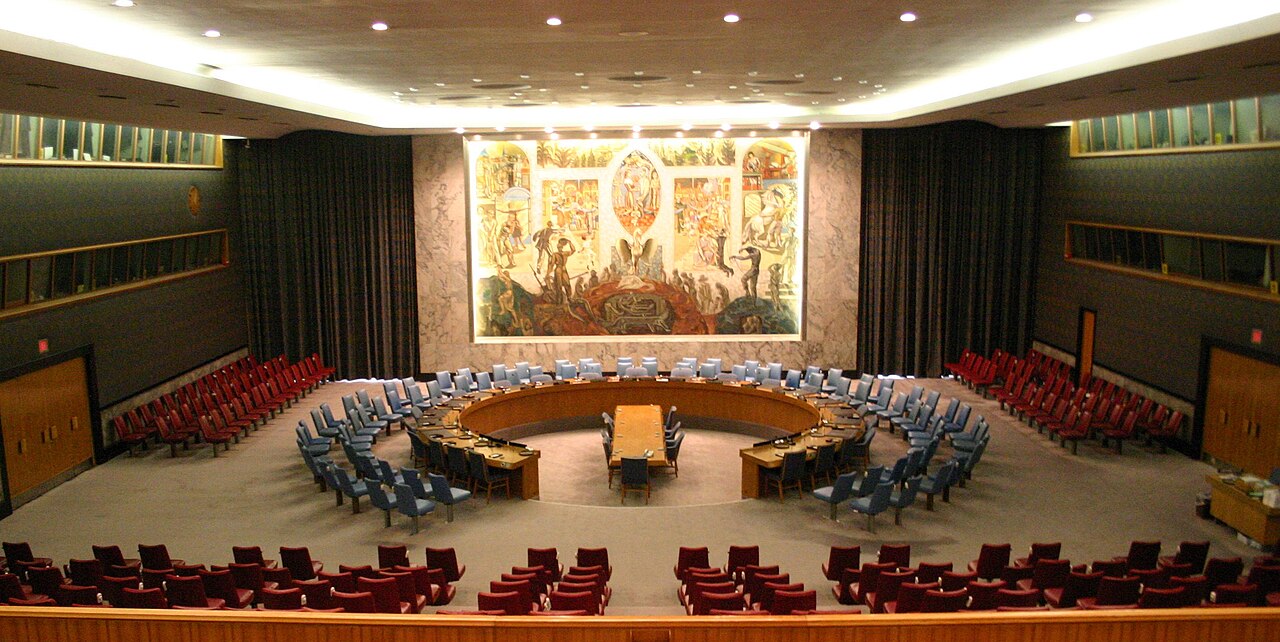
James Baker, the U.S. leader who handled relations with other countries, led a high-level meeting where many countries weighed war and peace. This was part of the Gulf War, a war in 1990 and 1991 in which countries led by the United States forced Iraq out of Kuwait after Iraq invaded it. It happened at the United Nations Security Council, a group of 15 countries in New York that can act to keep world peace. It happened on November 29, 1990.
Iraq, a country in the Middle East, had invaded and stayed in Kuwait, its small neighbor. By October 30, 1990, the U.S. government decided to push Iraq out by force if needed, because Iraq was still occupying Kuwait despite earlier demands. In November 1990, the United States and other countries added more forces in the Gulf and worked for clear permission to act, because Iraq had not changed its position.
On November 29, 1990, the Council met with Baker leading the meeting and 13 leaders who dealt with other countries present. The United States wanted a vote on using force, and Baker had met several leaders beforehand to win support. Because the Council said Iraq refused to obey its earlier decisions, it adopted Resolution 678, the decision that gave Iraq until January 15, 1991, to leave Kuwait or face force.
The vote was 12 to 2, with one country choosing not to vote yes or no. The decision gave the countries working with Kuwait permission to use force after the deadline. Iraq did not withdraw. Because Iraq showed no sign of leaving Kuwait by the deadline, U.S.-led forces began an air attack against Iraq on January 17, 1991.
This is one part of Gulf War.
When
Sometime on November 29, 1990.
- What the source says
- adopted by the Security Council at its 2963rd meeting, on 29 November 1990
- Written for the computer as
1990-11-29(Gregorian calendar, UTC; years at or below zero are BC: −0005 is 6 BC)- How sure
- exact, to the day
- Worked out by
- the Chronum server, method
edtf_gregorian_utcversion 1: the period lies within the written day
History Snippet never shows a single "best guess" date. The bar is the whole span the evidence allows; the hatched part means "somewhere in here". Why.
How we know
Presided by: U.S. Secretary of State James Baker presided over the meeting, which 13 foreign ministers attended.
Claim status: submitted, awaiting review
- supports U.N. authorizes war if needed but major powers hope for peace, Opening paragraphs
Secretary of State James Baker, who presided over the meeting
Vote result: The 15-member Council adopted the resolution by 12 votes to 2, with China abstaining and Cuba and Yemen voting against.
Claim status: submitted, awaiting review
- supports U.N. authorizes war if needed but major powers hope for peace, Paragraph on the vote
The 15-nation council authorized the military measure with a 12-2-1 vote.
Authorized: States cooperating with Kuwait were authorized to use all necessary means to enforce Resolution 660 and later resolutions unless Iraq complied by January 15, 1991.
Claim status: submitted, awaiting review
- supports Security Council resolution 678 (1990) [Iraq-Kuwait], Operative paragraph 2
to use all necessary means to uphold and implement resolution 660 (1990)
Caused by: By October 30, 1990, the U.S. government had decided to push Iraq out of Kuwait by force if necessary, and it then sought UN authorization.
Claim status: submitted, awaiting review
- supports The Gulf War, 1991 (Milestones in the History of U.S. Foreign Relations), Section on the Gulf War
By October 30, the Bush administration made a decision to push Iraq out of Kuwait by force if necessary.
Where
United Nations Security Council, New York
- Coordinates
- 40.7489, -73.9680 (modern map coordinates)
- Error distance
- the true spot could be up to 200 m from those coordinates
- Today this spot lies in
- United States
Borders shown are today's; the record says where the place is on the modern map, not what country ruled it then.
Who and what
- personJames Baker
led
- personEduard Shevardnadze
was there
Pictures
Record history
Every change is a new version; older versions stay readable forever.
- Version 2 · 2026-11-18 08:32 UTC · submitted, awaiting review
published after review of the private record